Loading...
Toggle navigation
Home
About Journal
Editorial Board
Instruction
Subscription
Advertisement
Contact Us
中文
Quarterly,Established in 2013
Administration
National Health Commission of the People's Republic of China
Sponsor
People's Medical Publishing House Co. Ltd.
Editor in Chief:
CHI Yi-fan
ISSN:2095-5308
CN:11-9331/R
Reader Center
Forthcoming Articles
Current Issue
Volumn Content
Archive
Most Read Articles
Most Download Articles
Most Cited Articles
E-mail Alert
RSS
Download
More...
Links
More...
Visited
Total visitors:
Visitors of today:
Now online:
Table of Content
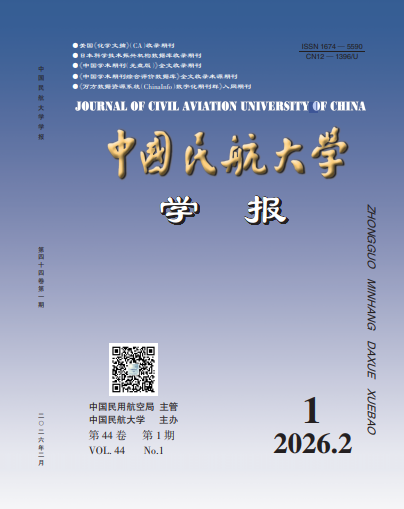
28 February 2026, Volume 44 Issue 1
Previous Issue
Air Transportation Management
LightGBM-based phased multimodal trajectory prediction method
2026, 44(1): 1-9.
Asbtract
(
2144
)
PDF
(1224KB) (
105
)
Related Articles
|
Metrics
as insufficient data diversity, dificulty in acquiringcritical data, high model complexity and poor generalization, this paper proposes a light gradient boosting ma-chine (LightGBM)-based phased multimodapn method (LightGBM-based PMTPM). Themethod can intelligently identify the flight phabased on data from the aircraft's own sensors,predict the 4D trajectory and real-time qualig an onboard computer. Experimental resultsshow that, during all flight phases, the LightGoutperforms the back propagation neural net-work-based phased multimodal trajectory predN-based PMTPM) in predictive performance,with root mean square error (RMSE) reductions of 64.86%, 13.15%, 80.88%, 77.46%, 86.45%, 3.46% and19.22%, respectively. The average evaluation time of the LighiGBM-based PMTPM is 59.890 ms, meeting theaccuracy and real-time requirements for 4D trajectory prediction of aircraft.
Fuzzy comprehensive evaluation of terminal area operational efficiencybased on interval numbers
XIE Chunsheng , GAO W anqi, , LU Fei
2026, 44(1): 10-16.
Asbtract
(
1956
)
PDF
(1111KB) (
70
)
Related Articles
|
Metrics
determined from the perspective of interval numberlistances, and weights are calculated using the ordered weighted averaging (OWA) operator combined with nor-nal distribution. Finally, the operational efficiency of terminal areas at domestic airports is evaluated based onthe established evaluation system. Taking four typical airports in the Beijing-Tianjin-Hebei region, namely Bei-jing Capital Intemational Airport, Beijing Daxing Intemational Airport, Tianjin Binhai International Airport, aneShijiazhuang Zhengding Intemational Airport, as examples, the terminal area operational efficiency is evaluated,resulting in ratings of good, good, poor, and poor, respectively. The research results show that the evaluation out-comes align well with the actual operating conditions of the terninal areas, verifying the feasibility of the methodproposed in this paper.
Prediction of taxi-out time for large airports based on machine learning
LI Nan , WU Longtian, , HAO Jinbiao 袁XU Rui
2026, 44(1): 17-24.
Asbtract
(
1040
)
PDF
(1742KB) (
78
)
Related Articles
|
Metrics
To improve the accuracy of taxi-out time prediction for large airports, this paper first identifies common featurevariables of taxi-out time at large airports through Pearson correlation coefficient analysis. Then, it comparespredictions of taxi-out time at Bejing Daxing International Airport and Hong Kong Chek Lap Kok InternationalAirport using classical machine leamning and deep leaming models. Experimental results show that, except for therandom forest (RF) model, the prediction results of each model are relatively close and perform well, with an av-erage prediction accuracy of 88.485%, an average prediction accuracy of 78.605% within 3 minutes, and an av-erage prediction accuracy of 93.867% within +5 minutes. The gradient boosting regression tree (GBRT) and sup-port vector regression (SVR) models outperform the others and are the best-performing models, and for the samebest-performing model, the prediction results between the two airports show litle difference. The common featurevariables of taxi-out time proposed in this paper can accurately predict taxi-out time at large airports. Classicalmachine leaming models achieve better prediction performance than deep leamning models, and the best-per-forming model demonstrates transferability.
Research on the driving factors of airport throughput under different regional characteristics
LI Longhaia , ZHU Y ufenga, , LIANG Zhixingb
2026, 44(1): 25-31.
Asbtract
(
1556
)
PDF
(1144KB) (
71
)
Related Articles
|
Metrics
To investigate the driving mechanisms of airport throughput under different regional characteristics, this papercarries out an analysis using an integrated approach combining Pearson correlation coefficients with entropy-weighted grey relational degree. First, the data of passenger as well as cargo and mail throughput data from trans-port airports in the 31 provincial-level administrative center cities of China between 2006 and 2023 were col-lected. Second, 9 categories of primary driving factor indicators, including gross regional product (GRP), peo-ple's living standards, tourism, ete., and 19 secondary driving factor indicators were selected, and Pearson cor-relation coefficients were used to select driving factors highly correlated with airport throughput. Finally, the en-tropy-weighted grey relational degree method was applied to the selected driving factors for weighted analysisand relational ranking, and the top five primary driving factor indicators from the ranking results were identifiedas key driving factors of airport throughput, with Tianjin Binhai Intemational Airport serving as a case study tovalidate the model's effectiveness. The results showed that the impacts of various driving factors on airportthroughput differ significantly, indicating that airports in provincial-level administrative center cities across dif-ferent regions exhibit regional characteristics. The research results of this paper can provide reference for futureplanning and sustainable development of airports with different driving patterns.
Research on the robustness of China忆s all-cargo aviation network based onnetwork efficiency
SHI Xuegang a , WU Linjiang b
2026, 44(1): 32-39.
Asbtract
(
1261
)
PDF
(2110KB) (
77
)
Related Articles
|
Metrics
Under the new development pattern, it is particularly important to enhance the risk resistance capability of China'sall-cargo aviation network. This paper first constructs an undirected weighted topological network structure basedon China's all-cargo air route data in 2023, then identifies key nodes and edges in the topological network usingdifferent methods, and finally explores the changing trends of network efficiency of the all-cargo aviation networkunder different attack strategies. The results show that the node degrees in both China's domestic all-cargo avia-tion network (referred to as the domestic network) and international all-cargo aviation network (referred to as theintemational network) follow an exponential distribution. In identifying key nodes in the domestic network, thePageRank algorithm outperforms the comprehensive degree method but is comparable to the node degree method,with both reaching the collapse threshold of network efficiency when the node failure ratio is 40%. The interna-tional network generally has weaker risk resistance capability than the domestic network, especially showinggreater vulnerability under edge failure scenarios. Based on the findings of this study, it is recommended toincrease the frequency of existing international all-cargo fights and continuously launch new intemational all-cargo air routes to enhance the robustness of the intemational network and the overall network's risk resistancecapability.
Future airports and smart equipment
Quantitative analysis of damage to airport taxiway bridges based on structural response parameters
ZHANG Y uhui , GAO Yichi , ZHAO Y uanyuan
2026, 44(1): 40-46.
Asbtract
(
1057
)
PDF
(2638KB) (
53
)
Related Articles
|
Metrics
To eficiently analyze the safe passage capacity of taxiway bridges under damage conditions and investigate theirresponse parameters under different damage scenarios, this paper adopts a numerical simulation method to es-tablish an aircraft-taxiway bridge coupled vibration damage model and conducts experimental analysis for eval-uating the safety load-bearing mechanical performance of taxiway bridges. According to relevant specifications,for different damage types of taxiway bridges (overall damage, bearing damage and local cracks), the overallstiffness damage degree is quantified as 5%, 10%, 15%, 20% and 25%, and the bearing stiffness damage degreeis quantified as 20%, 40%, 60%, 80% and 100%. Based on the position of prestressed tendons, five crackdepths of 20, 40, 60, 80 and 100 mm are set to quantify crack damage. Combining the loading effects of differentaireraft types, this study investigates two response parameters of taxiway bridges (frequency and mid-span de-flection) under various working conditions to verify the feasibility of damage grading, and perform related safetyload -bearing capacity analysis of taxiway bridges. The results show that the variations of frequency and mid-span deflection of taxiway bridges under different damage types (overall damage, bearing damage and localcracks) are all clearly correlated with the damage degree, and different damage types significantly affect thestructural response of taxiway bridges.
Applicability analysis of airport runway roughness evaluation using IRIbased on aircraft vibration response
QI Lin, CHENG Meipeng, Y ANG Shuai, WANG Qiang
2026, 44(1): 47-52.
Asbtract
(
1223
)
PDF
(1969KB) (
57
)
Related Articles
|
Metrics
Airport runway roughness has an important influence on the stable operation of aireraft on runways. The interna-tional roughness index (IRD) is a commonly used indicator for evaluating airport runway roughness, but IRI was o-riginally proposed as an indicator for highway roughness evaluation, and current research on the applicabilityanalysis of using IRI to evaluate airport runway roughness is insufficient. This paper establishes a virtual proto-type model and verifies its reliability. Aircraft taxiing simulation analyses are conducted separately on heteroge-neous runways with the same IRI, on runways characterized as smooth by IRI, and on runways with measured el-evation information, to obtain aircraft vibration response data and investigate the correlation between IRI and air-craft vibration response. The results show that on heterogeneous runways with the same IRI, aircraft vibration re-sponses exhibit completely different results, and on runways characterized as smooth by IRI, the correlation be-tween aircraft vibration response and IRI is very strong. The correlation between IRI obtained from different take-off lengths and the root mean square of vertical accelerations at the aireraft center of gravity and cockpit is poor,and the correlation between measured IRI and the root mean square of vertical acceleration in the aircraft cockpitis also poor. Therefore, using IRI to evaluate airport runway roughness is difficult to reflect the true vibration re-sponse of aircraft, it is recommended to establish a runway roughness evaluation indicator capable of identifyingthe time and location when unsafe vibrations occur during aircraft taxing, based on a comprehensive considera-tion of aircraft type, its vibration response and taxiing speed.
Research on the temporal and spatial variation characteristics of runway foundation temperature at Mohe Airport
WU Danze , FENG Li
2026, 44(1): 53-59.
Asbtract
(
1636
)
PDF
(2768KB) (
59
)
Related Articles
|
Metrics
Airport construction in permafrost regions is a worldwide technical challenge, lacking mature experience and in-volving significant engineering risks, thus urgently requiring the identification of the evolution characteristics ofpermafrost ground temperature to guide airport engineering practices in cold regions. This paper is based on threeintermittent ground temperature monitoring datasets collected over 17 years at Mohe Gulian Airport (referred to asMohe Airport), and analyzes the temporal and spatial variation characteristics and spatial dispersion of siteground temperatures by integrating muliple factors such as surface vegetation removal, construction disturbance,and climate warming. The study found that the original permafrost has significantly degraded, with the extents ofwam permafrost and deep seasonally frozen ground expanding; ground temperature variations exhibit depth-de-pendent stratified heterogeneity, and measurements at identical monitoring points show pronounced spatial dis-persion. The research findings provide key scientific support for airport design and construction in global per-mafrost and seasonally frozen ground regions, and hold important theoretical and practical value for advancingmajor infrastructure development in cold regions.
Analysis of the effect of XPS insulation board compressibility on the temperature field of permafrost runway foundations
QI Chunxianga , LU W eilonga, , HAN Zhuoa , MA Jiahuia , YUAN Zhongyuanb
2026, 44(1): 60-67.
Asbtract
(
1514
)
PDF
(3319KB) (
52
)
Related Articles
|
Metrics
To study the influence of compression deformation of the insulation layer under long-term aircraft loading on the temperature field of permafrost runway foundation (hereinafter referred to as subgrade), and in combination with the runway structure of Qinghai -Tibet Plateau airports, the finite element method was used to analyze the maximum stress range at the insulation layer during taxing of eight different types of aircraft. Furthermore, based on indoor model tests, the influence rule of the compression ratio of extruded polystyrene (XPS) insulation boardon its thermal conductivity under this stress, as well as the thermal insulation performance of XPS insulation boards with different thicknesses, was investigated. On this basis, a computational model of airport permafrostsubgrade was established for XPS insulation boards of different thicknesses. The effects of different compressionratios of the insulation layer on the thaw depth of permafrost subgrade and of runway width on the degradation of thermal insulation performance of XPS insulation boards were comparatively analyzed. The results show that the placement of XPS insulation boards can significantly reduce the thaw depth of the subgrade, and at the same compression ratio of the insulation board, an increase in runway width leads to an increase in the thaw depth of the subgrade. This study can provide a reference basis for the design of airfield pavements in permafrost regions of China.
Research on the ecological and environmental impacts and control measures ofspent airport deicing fluids
ZHAO Xiaohui , ZHANG Panwei , YANG Jia , WAN Xiaohong , ZHANG Haiyan
2026, 44(1): 68-72.
Asbtract
(
1045
)
PDF
(995KB) (
57
)
Related Articles
|
Metrics
To systematically address the impacts of spent deicing fluids on the ecological environment of airports and effec-tively respond to the core challenges posed by pollution from spent deicing fluids to green operational manage-ment at airports, this paper systematically analyzes the composition, application scale, and discharge characteris-tics of spent deicing fuids at airports both domestically and internationally. It elucidates the complex ecologicaland environmental impacts of spent deicing fluids on airports and surrounding water bodies, such as increasedorganic loading, decreased dissolved oxygen, elevated salinity, as well as soil salt accumulation and changes inphysicochemical properties, especially the environmental pollution caused by persistent organic pollutants intheir additives. Based on the above analysis, the paper proposes comprehensive management strategies tostrengthen effective collection, treatment, and recycling of spent airport deicing fluids; it also proposes developingefficient treatment technologies, further exploring economically feasible recycling routes, and providing scientificsupport for pollution prevention and control of spent deicing fluids and for sustainable development at airports
Dynamic simulation and optimization design of the frame for a small aircrafttowbarless towing vehicle
ZHU Hengjia, WANG Xinyue
2026, 44(1): 73-79.
Asbtract
(
1061
)
PDF
(2990KB) (
54
)
Related Articles
|
Metrics
The frame of the towing vehicle, as the core load-bearing structure of the aireraft towbarless towing vehicle, di-rectly determines the safety of the aircraft towing and taxiing system through its strength and stiffness. This paperdesigns a frame structure for the towing vehicle tailored to the towing requirements of small aircraft and developsa corresponding dynamic simulation model to thoroughly investigate the effects of towing speed and road obstaclebump height on frame loading. Finite element simulation, structural optimization design, and experimental vali-dation reveal that when the rear wheels of the towing vehicle encounter an obstacle bump, symmetric and equalmaximum forces are generated on the left and right side beams of the frame, and these forces increase significant-y with increasing towing speed. Under the condition of a towing speed of 30 km/h and an obstacle bump height of30 mm, the frame loading and stress level reach their peaks, causing local stress values to exceed the material'sallowable stress limit. After structural optimization, the frame's load-carrying capacity is improved by 86.31%without exceeding the allowable stress, and the accuracy of the optimized model is validated by experimental da-a. This paper can provide important theoretical basis and practical reference for the subsequent design and opti-mization of towing vehicle frames.
Aviation communication
Modeling the medium access control protocol of VDL Mode 2
LIU Haitao, DONG Qinzhuo, DA I Y ongzhang
2026, 44(1): 80-85.
Asbtract
(
1680
)
PDF
(1742KB) (
69
)
Related Articles
|
Metrics
VHF Data Link (VDL) Mode 2 is a critical infrastructure of the civil aviation air traffic management (ATM) sys-tem. The future ATM system will adopt the trajectory -based operations (TBO) paradigm, which imposes morestringent requirements on VDL Mode 2. To enhance the performance of VDL Mode 2, this paper develops a simu-lation model of its medium access control (MAC) protocol using the optimized network engineering tools (OPNET).The protocol employs the p-persistent carrier sense multiple access (p-CSMA) mechanism. Through extensivesimulations, the influence of the persistence parameter p on system throughput, transmission delay, and frameloss rate is systematically analyzed. The results show that p has a significant impact on these three performancemetrics, and a clear trade -off exists among them. By appropriately selecting the value of p, it is possible toachieve high throughput while maintaining low transmission delay and frame loss rate, thereby satisfying the reli-ability and real-time communication requirements of TBO operations.
Basic Research
New constructions of optimal and asymptotically optimal codebooks
GAO Y ou, , XIE Mingyue , WANG Gang
2026, 44(1): 86-90.
Asbtract
(
1783
)
PDF
(1027KB) (
55
)
Related Articles
|
Metrics
Codebooks are signal sets with low mutual correlation. Those codebooks meeting the Welch bound or the Lev-enshtein bound are mainly used to distinguish signals from different users in code-division multiple -access(CDMA) systems, and can also be applied in compressed sensing, coding theory, and quantum computing. Thispaper presents two new constructions of optimal and asymptotically optimal codebooks with respect to the Lev-enshtein bound. Firstly, a new class of optimal codebooks with respect to the Levenshtein bound is constructedusing design-theoretic object nets and Hadamard matrices. Secondly, a new class of asymptotically optimal codebooks with respect to the Levenshtein bound is constructed using permutation functions over finite fields.Parameter comparisons demonstrate that the construction parameters and methods for these two classes ofcodebooks represent novel contributions.
Complexity analysis of time series based on order entropy
DONG Keqiang a, b , LIU Jingna b
2026, 44(1): 91-96.
Asbtract
(
1835
)
PDF
(2198KB) (
57
)
Related Articles
|
Metrics
Traditional information entropy has certain limitations in analyzing the complexity of time series, as it does nottake into account the sequential relationship among successive elements. To address this issue, this paper pro-poses an improved entropy. First, order entropy is defined to measure the uncertainty of the sequence of succes-sive elements, and joint order entropy and average order entropy are further introduced to study the complex de-pendency between two time series. Then, these entropy -based measurement methods are applied to random se-quences following different distributions and to performance parameter sequences of aircraft engines to verify theeffectiveness of the improved method. The results show that the improved entropy can effectively measure the un-certainty in time series, and the influence of time delay on order entropy and average order entropy is relativelysmall.